Mega projects are shaping the travel conversation
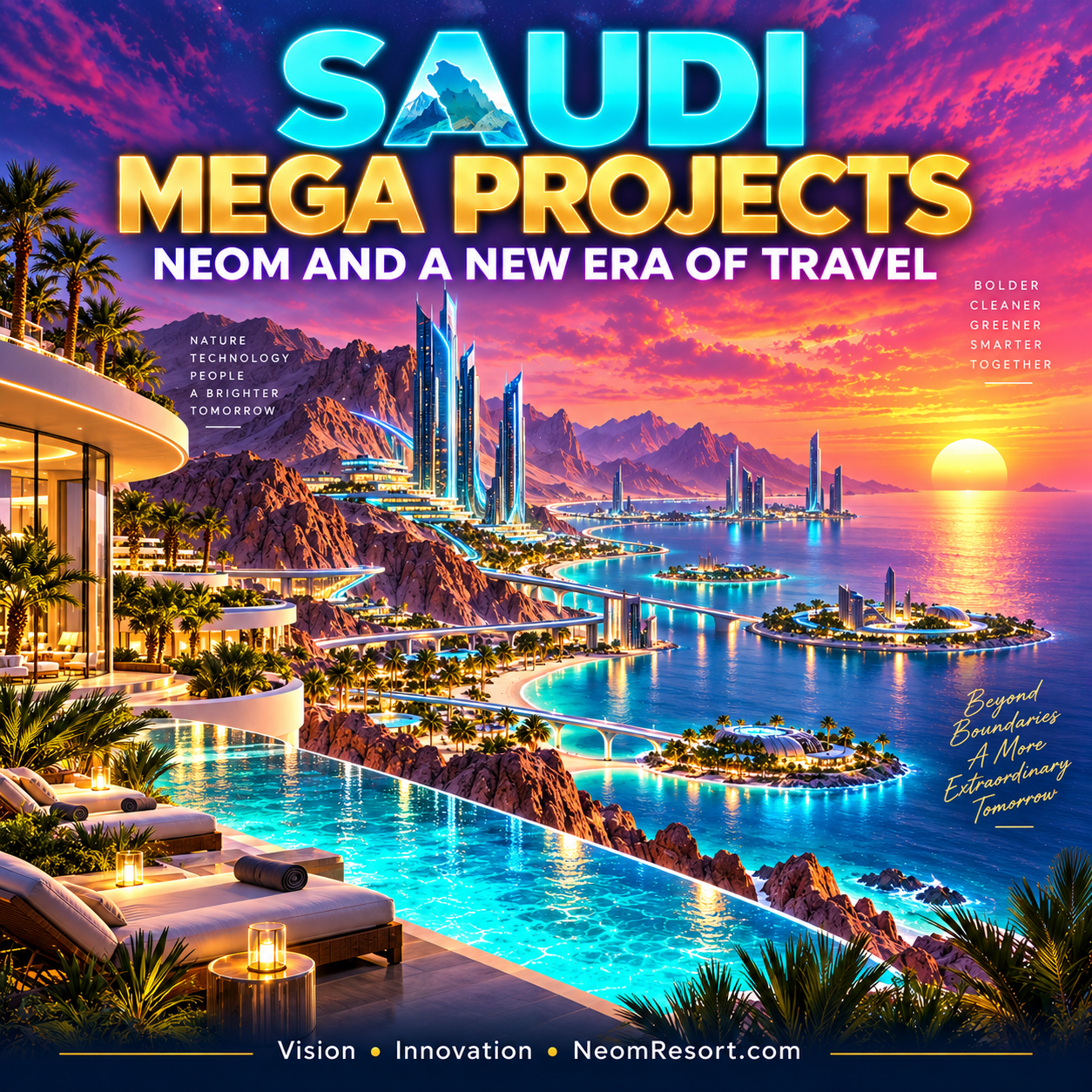
Saudi mega projects attract attention because they operate at the scale of landscapes rather than isolated buildings. They promise entire districts, new coastlines of hospitality, linked experiences, and design narratives strong enough to influence how people imagine future travel.
This scale can be exciting for tourism because it invites travelers to think beyond one hotel stay. A destination becomes a sequence of possible moments—arrival, exploration, architecture, nature, wellness, dining, and movement through a larger story-world.
NEOM sits at the center of this design-led momentum
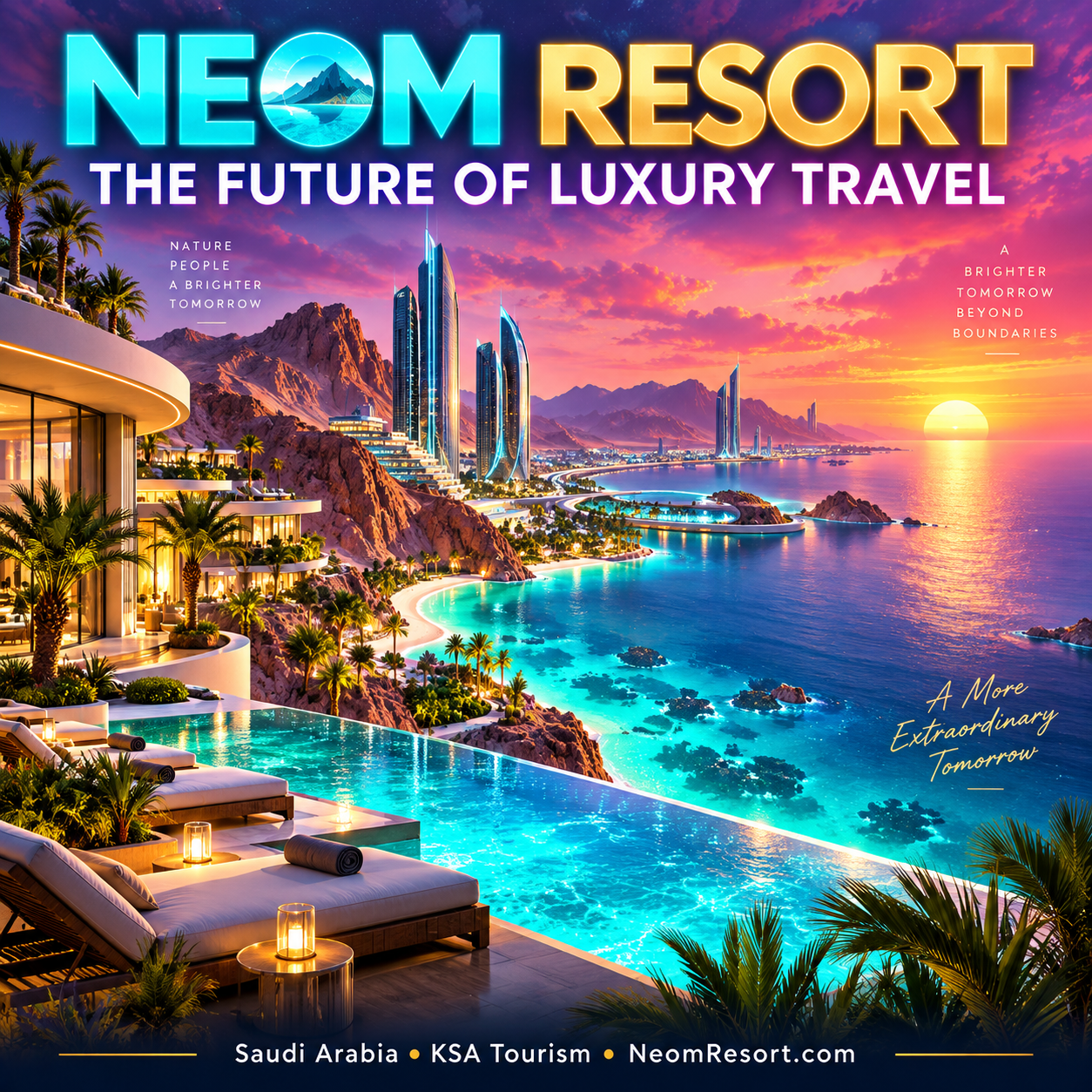
NEOM is often discussed as the clearest expression of Saudi Arabia’s mega-project travel identity. It links bold visuals with a promise of new hospitality settings, from coastal environments to mountain scenarios. In design terms, it is one of the strongest examples of tourism being communicated through atmosphere as much as through amenities.
That does not mean travelers should assume everything shown in concept artwork is immediately operational. It means the project plays a major role in setting expectations for what the Kingdom’s future-facing tourism brand looks and feels like.
What these projects mean for travelers
For travelers, mega projects can translate into a richer planning horizon. They expand the menu of possible experiences and encourage people to think in themes: marine leisure, wellness, scenic drives, curated architecture, sustainable hospitality, and design-led escape.
They also raise the bar for destination storytelling. Guests increasingly expect a place to feel intentional, cinematic, and cohesive. This affects how properties are marketed and how travelers compare options.
The role of architecture and infrastructure
Hospitality on this scale depends not just on rooms and restaurants but on the connective tissue between them. Roads, marinas, transfers, arrival sequences, and public-realm design all influence how a destination works in practice. Saudi mega projects are notable because they present infrastructure itself as part of the visitor experience.
That matters in luxury tourism, where friction is remembered as vividly as beauty. An elegant transfer, an intuitive arrival, and a well-designed coastal route can shape the quality of the stay as much as the suite does.
How to separate vision from immediate bookability
The larger the concept, the more careful travelers should be about checking current status. Ask which component is open, who is operating it, how access works, and what alternatives exist if schedules change. Large destination plans unfold in stages; a good trip plan acknowledges that reality.
Instead of trying to decode an entire masterplan at once, focus on the stay you might genuinely take next. Determine whether it fits your timing, style, and tolerance for uncertainty.
The long-term significance
Saudi mega projects matter because they are not only places; they are signals about where travel may be heading. They suggest a future in which hospitality, spectacle, environment, and destination branding are increasingly interdependent.
For travel watchers and potential guests alike, the message is simple: Saudi Arabia is becoming a laboratory for large-scale tourism ideas, and NEOM is one of its most visible symbols.